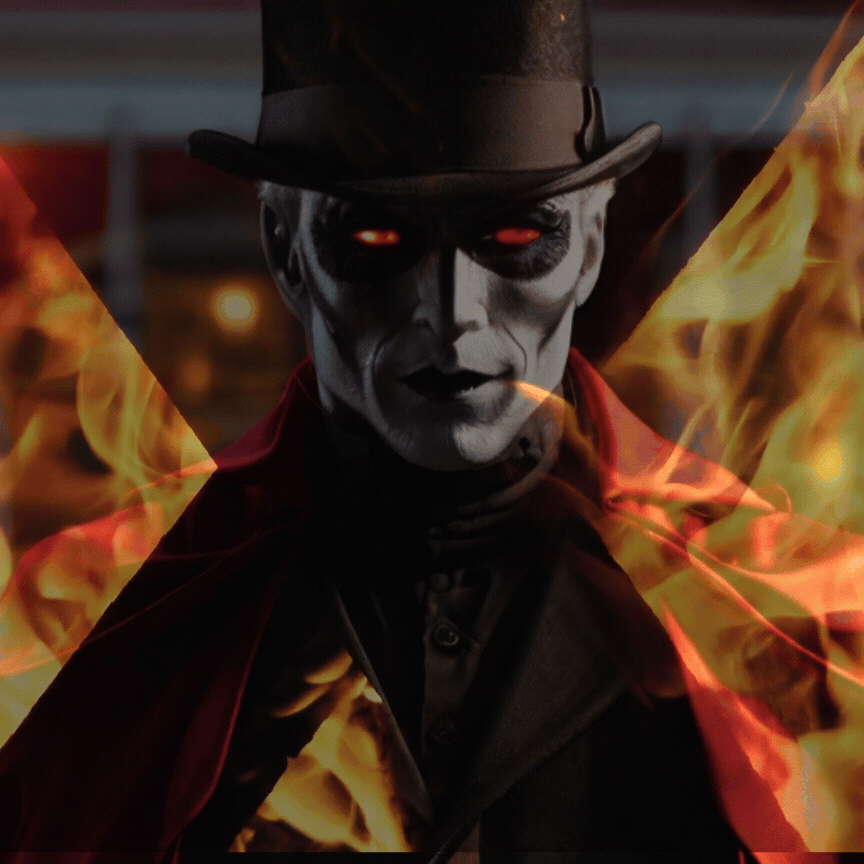
Veteran Horror Dedication: Herman Sisk’s “The Purple Heart”
“A sudden terror seized me. I turned to beseech the old man to let me go, but he was not there!.”
—Herman Sisk (The Purple Heart)
“A sudden terror seized me. I turned to beseech the old man to let me go, but he was not there!.”
—Herman Sisk (The Purple Heart)
“Haunted houses are nothing but superstition. They exist only in the imagination.”
—Farnsworth Wright (The Closing Hand)
For there be divers sorts of death—some wherein the body remaineth; and in some it vanisheth quite away with the spirit. This commonly occurreth only in solitude (such is God’s will) and, none seeing the end, we say the man is lost, or gone on a long journey—which indeed he hath; but sometimes it hath happened in sight of many, as abundant testimony showeth. In one kind of death the spirit also dieth, and this it hath been known to do while yet the body was in vigor for many years. Sometimes, as is veritably attested, it dieth with the body, but after a season is raised up again in that place where the body did decay.–Hali (Ambrose Bierce’s “An Inhabitant of Carcosa”)
“This apartment was suffused with a faint greenish light, the source of which I could not determine, making everything distinctly visible, though nothing was sharply defined. Everything, I say, but in truth the only objects within the blank stone walls of that room were human corpses. In number they were perhaps eight or ten – it may well be understood that I did not truly count them. They were of different ages, or rather sizes, from infancy up, and of both sexes. All were prostrate on the floor, excepting one, apparently a young woman, who sat up, her back supported by an angle of the wall. A babe was clasped in the arms of another and older woman. A half-grown lad lay face downward across the legs of a full-bearded man. One or two were nearly naked, and the hand of a young girl held the fragment of a gown which she had torn open at the breast. The bodies were in various stages of decay, all greatly shrunken in face and figure. Some were but little more than skeletons.”–Ambrose Bierce (The Spook House)
 Jeffrey LeBlanc