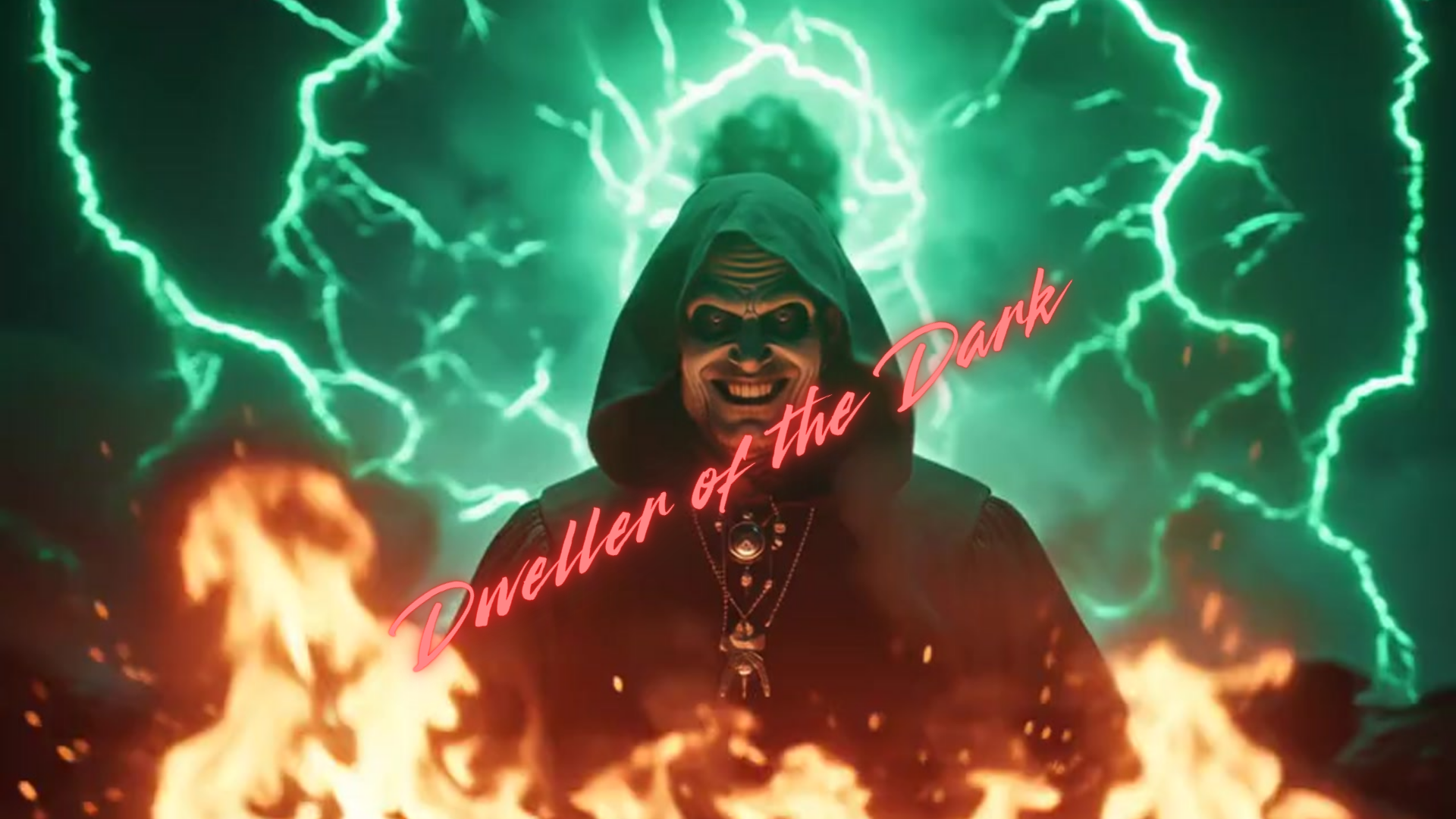
MYTHOS MAYHEM: ‘Nyarlathotep’ by H.P. Lovecraft (Featuring ‘Nyarlathotep the Yellow King’)
Nyarlathotep… the crawling chaos… I am the last… I will tell the audient void…’
–H. P. Lovecraft (NYARLATHOTEP)
Nyarlathotep… the crawling chaos… I am the last… I will tell the audient void…’
–H. P. Lovecraft (NYARLATHOTEP)
‘The most merciful thing in the world, I think, is the inability of the human mind to correlate all its contents. We live on a placid island of ignorance in the midst of black seas of infinity, and it was not meant that we should voyage far. The sciences, each straining in its own direction, have hitherto harmed us little; but some day the piecing together of dissociated knowledge will open up such terrifying vistas of reality, and of our frightful position therein, that we shall either go mad from the revelation or flee from the deadly light into the peace and safety of a new dark age.’
–H. P. Lovecraft (The Call of Cthulhu)
Of the long dead, who lived therein,
Paused by the cold hearth I felt the tendrils of hot sin,
Call of the bed, lover’s sigh made my head spin,
Head all aswirl, my mind lit in colors ablaze,
Will I survive this Christmas witch’s love haze?
Will I survive this Christmas witch’s love haze?
–CHRISTMAS WITCH
I call…I call…I call to you,
I call…I call…I call to you,
I call to you,
Lover hear…lover hear…lover hear my pleas!
Lover hear…lover hear…lover hear my pleas!
Lover come….lover come…lover come warm me in the snow,
Lover come….lover come…lover come warm me in the snow.
–SNOW ANGEL
Half of paradise,
All Hell to praise,
Red flamed star set ablaze,
Across the cosmos, across the universe,
Rockin forever in red haze,
Rockin all eternity in red haze.
–ACE’S FIRE
“Charles, let me help you. Your friends are not statues.” The gorgon’s hissing voice was terror beyond comprehension. Dread and despair had finally broken me.’
–Jeffrey LeBlanc (THE GORGON)
‘The transference of emotion is a phenomenon so common, so constantly witnessed, that mankind in general have long ceased to be conscious of its existence, as a thing worth our wonder or consideration, regarding it as being as natural and commonplace as the transference of things that act by the ascertained laws of matter. Nobody, for instance, is surprised, if, when the room is too hot, the opening of a window causes the cold fresh air of outside to be transferred into the room, and in the same way no one is surprised when into the same room, perhaps, which we will imagine as being peopled with dull and gloomy persons, there enters some one of fresh and sunny mind, who instantly brings into the stuffy mental atmosphere a change analogous to that of the opened windows.
–E.F. Benson (THE TERROR BY NIGHT)
‘Night is approaching. I can feel the change of temperature in the tomb. The worms are becoming more active in their squirming all around me. The maggots inch by the dozens across my chest. I hear the excited squealing and clawing of the rats too.’ –Jeffrey LeBlanc (SARAH ETERNALLY ENTOMBED)
The screams, that fourteenth night, continued until dawn. They were totally unlike any sounds in my experience. Impossible to believe they could be uttered and sustained by a human, yet they did not seem to be animal. I listened, there in the gloom, my hands balled into fists, and knew, suddenly, that one of two things must be true. Either someone or something was making these ghastly sounds, and Brother Christophorus was lying, or–I was going mad. Hearing-voices mad, climbing-walls and frothing mad. I’d have to find the answer: that I knew. And by myself.
–Charles Beaumont (THE HOWLING MAN)
“And then she died. How? I do not know. I no longer know; but one evening she came home wet, for it was raining heavily, and the next day she coughed, and she coughed for about a week, and took to her bed. What happened I do not remember now, but doctors came, wrote and went away. Medicines were brought, and some women made her drink them. Her hands were hot, her forehead was burning, and her eyes bright and sad. When I spoke to her, she answered me, but I do not remember what we said. I have forgotten everything, everything, everything! She died, and I very well remember her slight, feeble sigh. The nurse said: ‘Ah! and I understood, I understood!’
–Henri René Albert Guy de Maupassant (Was It A Dream)
Dim, dubious, bat-like creatures seemed to be flitting to and fro between one of the stone vats and the group that toiled like sculptors, clothing the bony foot with a reddish plasm which they applied and moulded like so much clay. Gaspard thought, but was not certain later, that this plasm, which gleamed as if with mingled blood and fire, was being brought from the rosy-litten vat in vessels borne by the claws of the shadowy flying creatures. None of them, however, approached the other vat, whose wannish light was momently enfeebled, as if it were dying down. –Clark Ashton Smith (The Colossus of Ylourgne)
Could it have been Love that made us immortal?
I ask you ancient silver moons of old for I am alone,
Answer me I beg! For all the golden suns are deaf and blind to my plea, To my plea
To my beloved who sits quietly in this forgotten tomb,
Damn the worm! You will not kiss my love wan and cold tenderly.
–CHARLIE’S DREAM
 Jeffrey LeBlanc