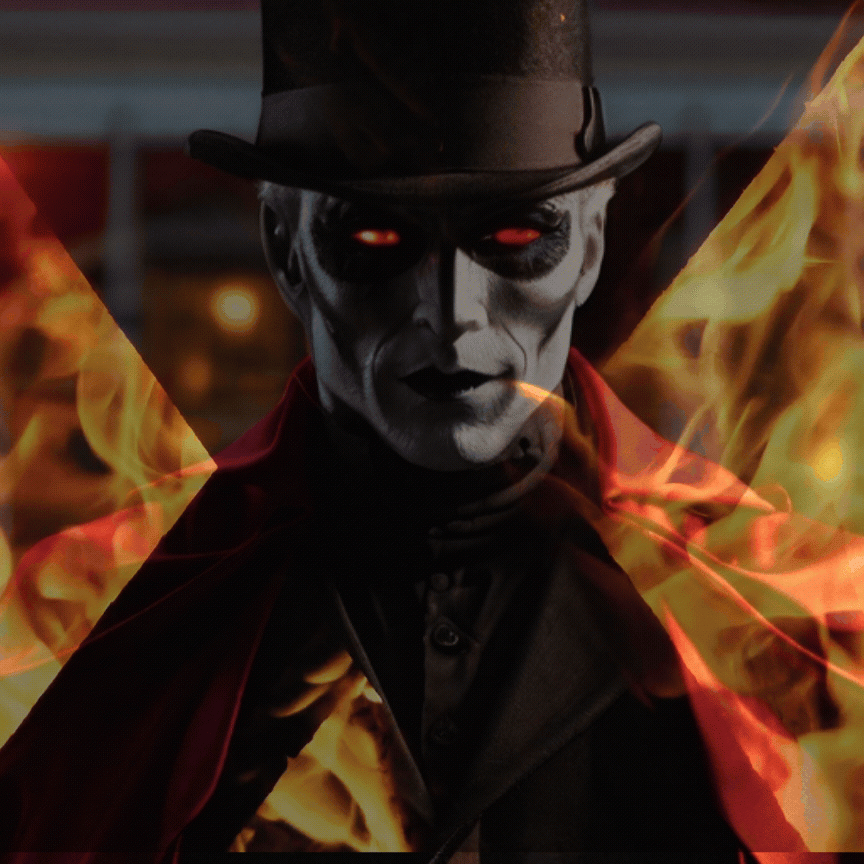
DONALD TRUMP SPECIAL DEDICATION: ‘Ever-Burning Light’ by Jeffrey LeBlanc
Fight! Fight! Fight!
–Donald J. Trump
July 13, 2024
Fight! Fight! Fight!
–Donald J. Trump
July 13, 2024
Oh witchfire burn take this pain away
Lost in the swamp where shadows sway
My love gone where night holds sway
Dreams and nightmares blend to gray
–Jeffrey LeBlanc (Witchfire Burns on Belle Rouge)
One drink one dance under skies
One bourbon one night no disguise
One scotch one tear that falls near
Raise your glass one last cheer –Jeffrey LeBlanc (Cajun Moonlight Tears)
He felt the cool air of the open sky on his cheeks,
and when he looked down, as they cleared the summit
of the dark-lying hills, he saw that Issidy had melted
away into himself and they had become one being.
And he knew then that his heart would never pain
him again on earth, or cause him to fear for any of his
beloved dreams. –Algernon Blackwood (The Dance of Death)
And waving in a dusky dragon light
Great moths whose wings unholy tapers char.
Red memory on memory, tier on tier, Builds up a tower, time and space to span;
Through world on world I rise, and sphere on sphere,
To star-shot gulfs of lunacy and fear— Black screaming ages never dreamed by man.’
–Robert E. Howard (Babel)
She took me to her elfin grot,
And there she gaz’d and sighed deep,
And there I shut her wild sad eyes So kiss’d to sleep.
And there we slumber’d on the moss,
And there I dream’d, ah woe betide!—
The latest dream I ever dream’d On the cold hill side.’ –John Keats (La Belle Dame Sans Merci)
‘That the thing was all a dream is beside the point. We have fallen in dreams before, but it is well known that if in one of those falls you ever hit the ground—you die:’ –Lord Dunsany (Lobster Salad)
Here they were: the drunks and the sinners, the gambling men
and the grifters, the big-time spenders, the skirt chasers, and all
the jolly crew. They knew where they were going, of course, but
they didn’t seem to be particularly concerned at the moment.
The blinds were drawn on the windows, yet it was light inside,
and they were all sitting around and singing and passing the
bottle and laughing it up, telling their jokes and bragging their
brags, just the way Daddy used to sing about them in the old
song.
“Mighty nice traveling companions,” Martin said. “Why, I’ve
never seen such a pleasant bunch of people. I mean, they seem
to be really enjoying themselves!”
“Sorry,” the conductor told him. “I’m afraid things may not
be quite so enjoyable once we pull into that Depot Way Down
Yonder.”
–Robert Bloch (That Hell-Bound Train)
“Take the blood in my veins Madeline!” I ripped the sleeves of my shirt and opened my veins. “Take this heart in my chest! But live damn you. For the world is a darker place without you in it.”–Jeffrey LeBlanc (For the Love of a Phantom)
Away with us he’s going,
The solemn-eyed:
He’ll hear no more the lowing
Of the calves on the warm hillside
Or the kettle on the hob
Sing peace into his breast,
Or see the brown mice bob
Round and round the oatmeal chest.
For he comes, the human child,
To the waters and the wild
With a faery, hand in hand,
For the world’s more full of weeping than he can understand.–William Butler Yeats (The Stolen Child)
With blood rilling heavily upon their faces, with the somnolent, vigilant, implacable and eyeless Shape at their heels, herding them on, restraining them when they tottered at the brink, the three began their second descent of the road that went down forever to a night-bound Avernus. –Clark Ashton Smith (The Dweller in the Gulf)
What the devil was wrong with him, anyway? Henderson smiled apologetically at the empty darkness. This was the smell of the costumer’s shop, and it carried him back to college days of amateur theatricals. Henderson hiad known this smell of moth balls, decayed furs, grease paint aind oils. He had played amateur Hamlet and in his hands he had held a smirking skull that hid all knowledge in its empty eyes—a skull, from the costumer’s. –Robert Bloch (The Cloak)
Which Earth and Heaven could not convulse,
A mighty lesson we inherit:
Thou art a symbol and a sign
To Mortals of their fate and force;
Like thee, Man is in part divine,
A troubled stream from a pure source;
And Man in portions can foresee
His own funereal destiny;
His wretchedness, and his resistance,
And his sad unallied existence:
To which his Spirit may oppose
Itself—and equal to all woes,
And a firm will, and a deep sense,
Which even in torture can descry
Its own concenter’d recompense,
Triumphant where it dares defy,
And making Death a Victory.–Lord Byron (Prometheus)
hen I sank into the depths, and I heard the King in Yellow whispering to my soul: “It is a fearful thing to fall into the hands of the living God!” –Robert W. Chambers (The King in Yellow)
I was rid of feeling, because I had been killed, but perception and thought were in my unhappy soul. The dawn widened, and I saw the desolate houses that crowded the marge of the river, and their dead windows peered into my dead eyes, windows with bales behind them instead of human souls. I grew so weary looking at these forlorn things that I wanted to cry out, but could not, because I was dead. Then I knew, as I had never known before, that for all the years that herd of desolate houses had wanted to cry out too, but, being dead, were dumb. And I knew then that it had yet been well with the forgotten drifting things if they had wept, but they were eyeless and without life. And I, too, tried to weep, but there were no tears in my dead eyes. –Lord Dunsany
 Jeffrey LeBlanc